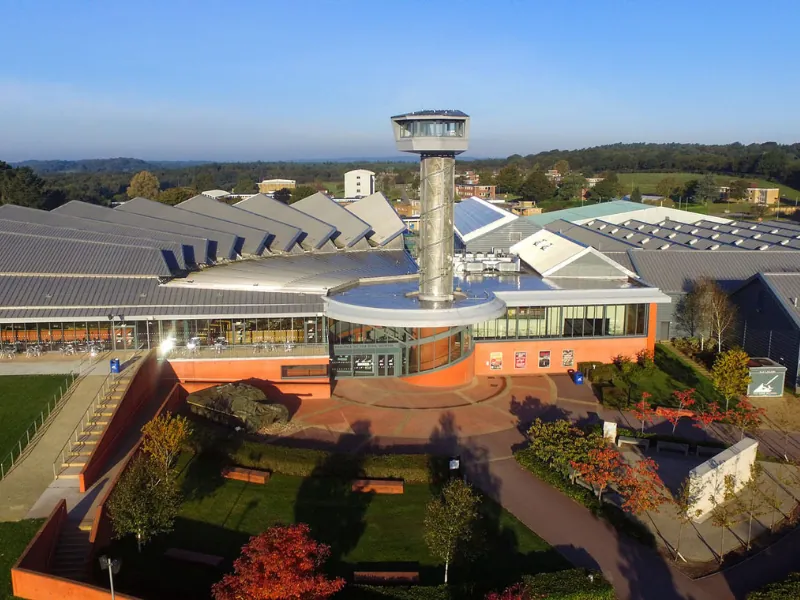
The Tank Museum is at Bovington Camp, eighteen kilometres north-east of Weymouth, and it holds almost 300 armoured fighting vehicles — the most comprehensive collection of its kind anywhere.
It is the museum of the Royal Tank Regiment and the Royal Armoured Corps, and it is a registered charity.
Bovington has been the home of British armoured training since the First World War, which is why the collection is here: it began as a park of captured and obsolete vehicles kept for instruction, and never stopped growing.
Tiger 131 — the only working Tiger I in the world. Captured in Tunisia in April 1943, restored to running order, and driven at the museum’s events. It is the most famous single tank in existence and people travel from other countries to see it.
Little Willie and the Mark I — the museum holds a British First World War Mark I, the oldest surviving combat tank in the world, and the prototype Little Willie. Tanks were invented in Britain in 1915–16, and this is where the evidence is.
Almost everything, from every major producing nation.
First World War: Mark IV, Whippet, German A7V.
Second World War: Panther, Jagdpanther, King Tiger, Sherman, Churchill, Matilda, T-34, Cromwell.
Cold War and modern: Centurion, Chieftain, Challenger, T-72, Leopard.
The Fury tank — the M4A3E8 Sherman used in the film — plus vehicles from Indiana Jones and the Last Crusade and other productions, which is what a good number of visitors come for and are not embarrassed about.
The Trench Experience — a walk-through First World War trench with sound and effects, which is genuinely well done.
The Tank Story hall, telling the development chronologically.
The Vehicle Conservation Centre, where restoration work is visible.
The museum’s flagship event, usually in June, at which restored vehicles including Tiger 131 are driven in the arena with commentary.
It is one of the largest events of its kind in the world, tickets sell out well in advance, and visitors describe it in superlatives. There are smaller live driving displays through the season.
The consistent themes: the staff are excellent — friendly, engaged and evidently well managed; there is a massive amount to see, read and do; and there are good interactive exhibits throughout.
The other consistent theme is time. There is far more here than people expect, and visitors who allow two hours regret it.
Allow a full day, or at minimum four to five hours.
Admission charged; the ticket is normally valid for a full year of return visits, which is unusually generous and worth knowing.
Time: a full day.
Facilities: café, restaurant, an excellent shop, toilets, picnic areas.
Parking: free and large.
Access: the halls are level, indoors and fully accessible — one of the more accessible major museums in the south-west.
Weather: entirely indoors apart from the outdoor arena, which makes it a first-choice wet-day plan for the whole region.
Linsay Road, Bovington, near Wool, about thirty minutes from Weymouth by road.
Wool station is 1.6 kilometres away on the Weymouth–London line, with a walk or a local bus.
Clouds Hill, T. E. Lawrence’s cottage, National Trust, is two kilometres away — Lawrence served at Bovington as an aircraftman and died in a motorcycle crash on the road nearby in 1935.
Monkey World, the ape rescue centre, is five minutes away.
Lulworth Cove and Durdle Door are twenty minutes south.
Yes — the only working Tiger I in the world, restored to running order and driven at the museum’s events.
A full day, or four to five hours at minimum. Visitors consistently underestimate it.
Normally yes — it converts to a year’s return admission. Ask when you buy.
Yes, it is almost entirely indoors and is the region’s best wet-day option.
The museum’s flagship event, usually in June, with restored vehicles including Tiger 131 driven in the arena. Tickets sell out well ahead.